Understanding Anatomy, Normality, and Pleasure—Gently
There is a part of the body that exists purely for pleasure.
It has no reproductive function and no secondary role. It exists only for sensation, response, and feeling. That part is the clitoris.
And yet, for something so central to pleasure, it remains surprisingly misunderstood.
Many people know where the clitoris is, but feel uncertain about what’s normal—what it should look like, how it’s supposed to respond, or why sensation can feel powerful one day and distant the next. Questions like “Is this normal?”, “Does my body look right?”, or “Why doesn’t it always respond the same way?” are far more common than most people realize.
This confusion isn’t a personal failure, and it isn’t a problem with the body. It’s the result of years of incomplete education, limited representation, and a cultural tendency to treat pleasure as something that should be instinctive rather than understood.
Understanding clitoral anatomy isn’t about technique, performance, or doing something “correctly.”
It’s about replacing uncertainty with clarity—about learning how the body actually works so shame no longer fills the gaps where information should have been.
When you understand the clitoris as a real, complex part of the body—one shaped by anatomy, nerves, hormones, and emotional context—many of the questions soften. What once felt confusing begins to feel human. And what once felt “wrong” often turns out to be entirely normal.

What the Clitoris Is Actually For
The clitoris has one primary purpose: pleasure.
It exists solely for sensation, response, and feeling—not reproduction, not function for someone else, and not as a secondary feature of sex. This is not opinion or metaphor. It is anatomy.
What often surprises people is just how sensitive this structure is. The clitoris contains more than 10,000 nerve endings, making it one of the most responsive parts of the human body. For many people with vulvas, clitoral stimulation—whether direct or indirect—is essential for orgasm and sexual satisfaction.
And yet, for a long time, this wasn’t widely acknowledged.
For decades, sexual science focused almost exclusively on reproduction. Female pleasure was minimized, misunderstood, or treated as optional. It wasn’t until modern imaging studies in the 1990s that researchers fully mapped the clitoris as a large, complex internal organ, rather than a small external point—something now clearly outlined by the Cleveland Clinic.
This context matters.
If pleasure has ever felt confusing, inconsistent, or difficult to access, the explanation is rarely about your body “not working.” It’s about how little accurate, compassionate information most people were given in the first place.
Understanding what the clitoris is actually for isn’t about technique or performance. It’s about clarity. It’s about removing shame that never belonged to the body—and replacing it with knowledge that allows pleasure to be approached with curiosity rather than pressure.
The issue was never your body. It was the story we weren’t told about it.
Beyond What You Can See: Clitoral Anatomy Beneath the Surface
The clitoris is not just a visible “button.”
Although it’s often described that way, what you see on the outside is only a small part of a much larger structure. In reality, the clitoris is a complex internal organ—more like an iceberg than a dot.
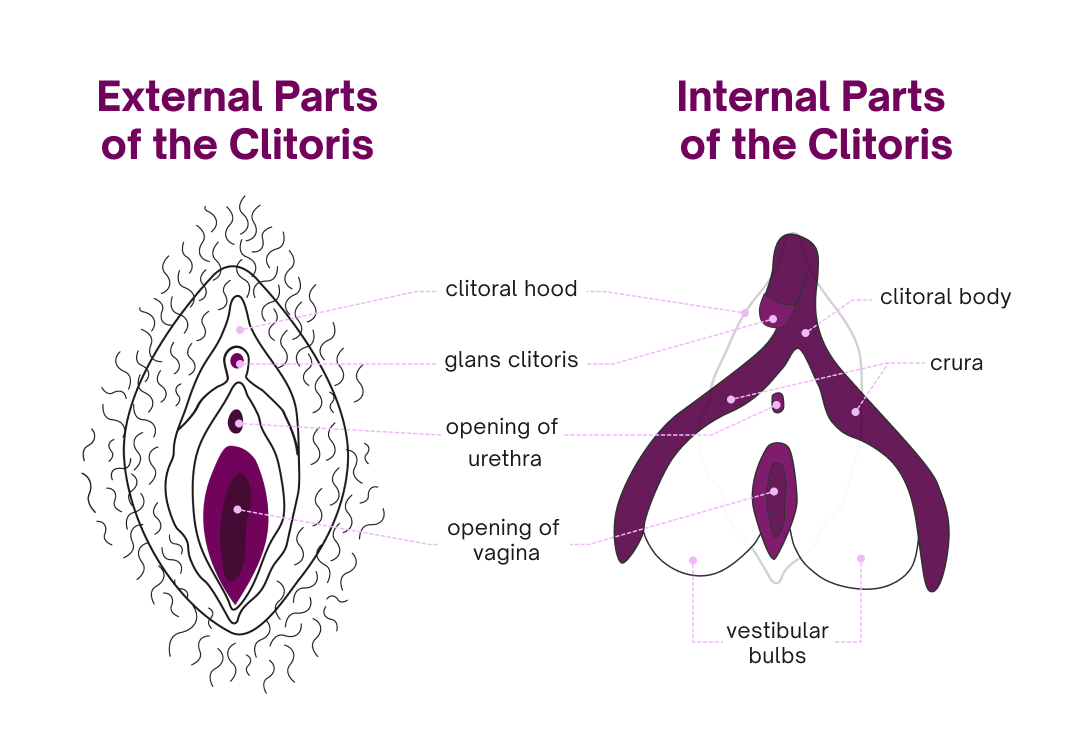
The external portion, known as the glans, is only the tip. Beneath the surface, the clitoris extends inward and branches into two long structures that curve around the vaginal canal. These internal extensions are commonly referred to as the clitoral root, anchoring deep within the body and surrounding areas involved in sexual sensation.
During arousal, this internal tissue fills with blood, much like other erectile tissue in the body. This is why pleasure can feel broad rather than pinpointed—why sensation may feel internal, diffused, or difficult to locate precisely. It also explains why pleasure doesn’t always depend on direct touch to the visible clitoris.
In fact, much of clitoral sensation is felt, not seen. Medical research has helped clarify this internal structure in recent decades, including detailed anatomical descriptions shared by institutions like the Cleveland Clinic. This understanding has shifted how pleasure is explained—not as something limited to one spot, but as a response shaped by internal anatomy, blood flow, and the nervous system.
Recognizing the full structure of the clitoris helps explain why pleasure varies so widely between people—and even within the same body over time. That variation isn’t a flaw or inconsistency. It’s a natural outcome of how the body is designed.
Understanding what’s beneath the surface allows pleasure to be approached with more patience, curiosity, and self-trust—rather than confusion or self-blame.
The Clitoris, the G-Spot, and Vaginal Sensation: One Connected System
Pleasure is often described in separate categories—clitoral, vaginal, G-spot—as if each came from a different system in the body.
This way of talking about pleasure can make people feel confused when their experience doesn’t fit neatly into one label.
In reality, these sensations come from one connected anatomical structure, not isolated parts.
The clitoris is far more than what’s visible externally. Beneath the surface, it extends inward and surrounds the vaginal canal. Because of this internal structure, many sensations felt during penetration are actually linked to internal clitoral stimulation, even when the external glans isn’t being touched directly.
What’s commonly called the G-spot is not a separate organ. It refers to an area where internal clitoral tissue, nerves, and surrounding structures intersect. This helps explain why stimulation in this region can feel intensely pleasurable for some people—and less noticeable for others.
During arousal, nearby tissues such as the vestibular bulbs also swell with blood. For some bodies, pressure or movement that engages these structures creates broad, spreading pleasure. For others, the same stimulation may feel neutral or overwhelming. These differences reflect natural variation, not dysfunction.
There is no hierarchy of orgasms.
No type of pleasure is more “real,” advanced, or valid than another.
Understanding pleasure as a connected system—not a checklist—can ease comparison and self-doubt. Bodies respond differently depending on anatomy, emotional safety, and context, and all of those responses are normal.
What Does a Clitoris Look Like? Why There Is No Standard
Many people quietly wonder, what does a clitoris look like?
The most honest answer is simple: there is no standard appearance.
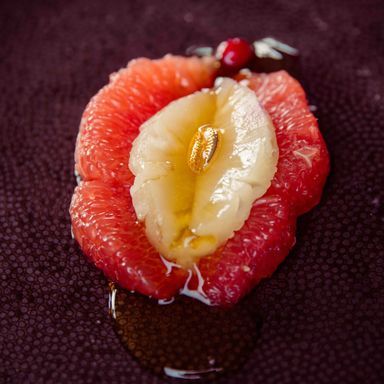
Some clitorises are more visible, while others are mostly covered by the clitoral hood. Some have larger hoods, smaller glans, or lighter and darker coloration. These differences are shaped by genetics, hormones, and natural variation—not by health, attractiveness, or sexual ability.
Concerns about whether a clitoris looks “right” don’t come from biology.
They come from comparison and limited representation.
In reality, variation is the norm—and the body doesn’t need to conform to a visual standard in order to experience pleasure or respond fully.
Size, Sensitivity, and Sexual Arousal
While the external glans of the clitoris is relatively small, the full clitoral structure extends several inches inside the body. During arousal, this internal tissue can swell noticeably. Still, size alone doesn’t determine pleasure—responsiveness is shaped by far more than anatomy.
Sensitivity varies widely not only from person to person, but also from moment to moment. Hormonal shifts, stress, fatigue, emotional safety, and mental focus all influence how the clitoris responds. A body that feels highly sensitive one day may feel muted the next, and that fluctuation is normal—not a sign that anything is wrong.
When sensation feels distant or difficult to access, it’s often less about the body “failing” and more about the nervous system being overwhelmed or guarded. Why You Can’t Feel Anything When Masturbating — And What It Really Means explores how pressure, stress, and emotional load can quietly shut sensation down—and why gentleness helps it return.
What matters most is how safe the nervous system feels. When there is pressure—internal or external—the body often becomes vigilant rather than receptive. Pleasure tends to deepen when attention slows, expectations soften, and sensation is allowed to unfold without urgency. Presence matters more than technique.
This is also why desire doesn’t always begin with direct touch. For many people, arousal is influenced just as much by context, emotional cues, and non-sexual forms of comfort as by stimulation itself. How to Hump a Pillow: Don’t Worry—Everyone Does It, and Here’s Why It Feels So Good explores how gentle pressure, positioning, and body weight can help the nervous system relax—allowing pleasure to emerge without force or performance pressure.
Pleasure is not something the body needs to be pushed into. More often, it arrives when the body feels supported enough to respond on its own.
Exploring Sensation as Self-Connection Without Pressure
Exploration doesn’t need urgency—or intensity—to be meaningful.
Some people prefer gentle contact through the clitoral hood. Others notice sensation around the area rather than directly on it. There is no universal rhythm or pressure, only attention and consent from the body itself. When pressure fades, sensation often becomes clearer rather than weaker.
For many people, this is why imagination and sound feel especially supportive. Audio allows sensation to unfold gradually, without visual comparison or performance pressure. Auralism: What It Is, Why Sound Triggers Sexual Arousal, and How People Explore Audio Intimacy explores why sound often feels safer and more grounding than visuals, especially when the nervous system needs time to settle.
Exploration also doesn’t need force to deepen desire. Softness, slowness, and emotional safety can open space for arousal in ways intensity never does. Vanilla Kinks: Exploring Gentle Sexual Desires and Emotional Intimacy reflects on how gentle, emotionally attuned experiences can be deeply arousing—without pushing the body beyond its comfort.
At MagicWave, we see understanding pleasure as an act of self-connection, not self-improvement. Learning about the clitoris isn’t about doing something “right.” It’s about building trust with your own sensations and responses. Because pleasure is closely tied to the nervous system, it can sometimes bring emotional responses along with it. If you’ve noticed emotional shifts after intimacy, How You Feel After Sex: Why Tiredness, Sleepiness & Emotional Drop Are More Normal Than You Think offers reassurance and context.
Questions People Also Ask
1.What is clitoral anatomy?
Clitoral anatomy refers to the full structure of the clitoris—not just what’s visible on the outside.
It includes the external glans as well as internal components such as the clitoral root and surrounding erectile tissue. In fact, most of the clitoris exists beneath the surface, extending inward around the vaginal canal.
2.What does a healthy clitoris look like? Is mine normal?
There is no single “healthy” or “normal” appearance.
Clitorises vary widely in size, color, shape, and visibility. Some are more exposed, while others are mostly covered by the clitoral hood. These differences are natural and do not affect sexual function or pleasure.
If you’re wondering whether yours looks “right,” the answer is usually yes.
3.What is a normal clitoral size?
There is no standard or ideal size.
The visible part of the clitoris is only a small portion of its full structure, and most of it is internal. Because of this, size is not a reliable indicator of sensitivity, arousal, or pleasure.
4.What is the white stuff in or under the clitoral hood?
This is usually smegma—a natural buildup of shed skin cells and oils.
It’s common and not unhealthy. Gentle hygiene is usually sufficient. If it’s accompanied by pain, irritation, or strong odor, it may be worth checking with a healthcare provider.
5.Is it normal to have “big flaps” down there?
Yes.
What people often call “big flaps” are typically the labia minora, which vary greatly in size, shape, and symmetry. This variation is completely normal and does not indicate a health or sexual problem.
6.Where is the most sensitive part of a female? Is there a “sweet spot”?
There is no universal sweet spot.
Sensitivity varies by anatomy, emotional state, arousal, and context. Pleasure doesn’t come from a single location—it’s shaped by how different structures work together and how safe and present the body feels.
7.How can you tell if a clitoris is aroused or erect?
During arousal, clitoral tissue fills with blood, similar to other erectile tissue.
This may show up as subtle swelling, increased sensitivity, warmth, or a feeling of fullness—much of which happens internally and may not be visually obvious. Arousal doesn’t always look the same, and it isn’t always visible.
8.Why does clitoral sensitivity change?
Clitoral sensitivity can fluctuate due to hormones, stress, emotional safety, fatigue, and mental focus.
These changes are normal. Sensation may feel heightened at times and muted at others, even within the same person. If changes are sudden, painful, or distressing, it can be helpful to check in with a healthcare professional.
A Gentle Invitation from MagicWave
At MagicWave, we believe intimacy deepens when pressure fades and curiosity is welcomed.
Understanding your body—its structure, rhythms, and responses—is not about fixing yourself. It’s about learning to listen, without judgment or urgency.
Pleasure doesn’t arrive the same way for everyone. Sometimes it’s physical. Sometimes emotional. Sometimes quiet, gradual, and deeply internal. When intimacy is approached with softness rather than expectation, connection has more room to unfold—at your own pace, in your own language.
If you’re curious about exploring desire through voice, imagination, and emotional presence, the MagicWave app offers a space where intimacy feels self-led rather than performative. Here, connection begins with listening.
Discover more on the MagicWave App for iOS or Android, and explore a world where emotional intimacy meets imagination.
Hot Topics: Dive Deeper Into Sensation, Desire, and Self-Connection
Want to explore further? These are some of our most-read and most-shared guides—each touching on a different side of pleasure, curiosity, and emotional intimacy:
Each of these pieces explores desire from a different angle—without shame, pressure, or performance.